Since 1969, restaurant, hotel, travel & other witty reviews by a handpicked, worldwide team of discerning professionals—and your views, too.

Democracy and the Kid
on November 11th, 2010
Print This Post Print This Post

11

Nov

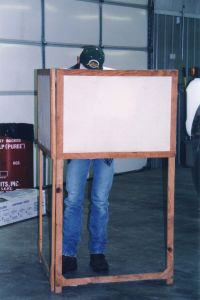
voting booth Democracy and the Kid

Last week, many Americans took part in democracy by voting

by André Gayot


Tim is the smart, nine-year-old son of my young friend and colleague Mac Bramble. I like it when he calls me “Uncle” because it makes me feel younger, as Grandpa would be more appropriate. He enjoys asking questions, as well as teasing me a little bit. He listens to the news, and — what’s extraordinary for this generation — reads the newspapers (or at least their first page) left by his dad on the couch, but he does not understand everything. So, he often demands clarifications:


Tim: Uncle André, what are the elections about?


AG: They are an exercise in democracy. People elect people to represent them.


Tim:  Represent them for what?


AG:  To tell them what they have to do. We call that the law. It tells you what’s right and what is not. In brief, this is what they call democracy. The majority determines for you and me the good and the evil.


Tim:  But if I don’t like what I am told to do, am I against democracy?


AG: Not necessarily, but you are the minority.


Tim: And then, what are my rights?


AG: You can protest in the streets and elsewhere, but usually that does not have a substantial effect. This is how democracy works.


Tim: If I don’t want to be the minority, and if I want to win, is it possible to buy my election?


AG:  Oh, no! You can’t do that. That’s not democratic. There’s no price tag for an election. The principle is that the majority of the people chooses you and then you win. If they don’t like you, you lose. Democracy has nothing to do with money. “You can’t buy love,” as the old song goes. Same for democracy.


Tim: But I read that in her run for office, a lady spent 154 million dollars and then some.


AG: See what I told you. Money is not an issue: she was not elected.


Tim: So she spent the majority of the money and at the end of the day, she finishes the race in the minority. She only won the meager right to protest. This is quite a pricey exercise of democracy.


AG: Indeed, she can complain that the price is not right, unless all this money is for the cost of the fun she had. One more time: democracy is not for sale. Well, at least in theory.


Tim: When elected people have finished representing us, what happens to them?


AG:  They retire and make a lot of money writing a book: 300 long pages on which they assure us that they are pleased with what they did to represent us. Some people are not so sure about that. With the change of tides, these minority protesters often become the majority and the story continues.


Tim: Thanks, Uncle André, but frankly, the mechanism of democracy is still a bit obscure for me. Fortunately, I am too young to vote. I need more time to reflect on the subject and do democracy right.


PS: This is just a general conversation between a curious kid and an adult and any resemblance to actual facts would be a mere coincidence.


1 Comment »

  1. OK … thank you for that. I hope your next post will address why we can spend hundreds of billions of dollars on a war, but when a fraction of that is spent of health care or education FOR THE AMERICAN PEOPLE, it becomes a problem. Thank you!

    Comment by Vanessa McGrady Spiller — November 14, 2010 @ 9:16 am

RSS feed for comments on this post. TrackBack URL

Leave a comment