Of the Good Use of Math in the Hospitality Industry
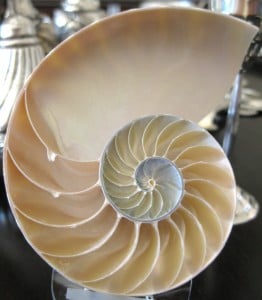
The Nautilus shell, 450 million years old is still a mystery and an inspiration for mathematicians
By Andre Gayot
Usually, hotel meeting rooms bear grandiose names like “The Imperial Room” or “The Majestic Room.” But in Hotel Indigo, a San Diego boutique hotel, their modest function space is dubbed “The Fibonacci Room.” Many visitors would immediately assume the Italian name in such a location refers to some variety of pizza.
Shame on us! We should be taught in first grade to pay respect to the genius Fibonacci (1175-1250), whose real name was Leonardo Pisano, who changed our lives when he changed the way we represent numbers way back in the XII, I mean 12th century. Fibonacci helped the world to adopt Arabic numerals instead of the Roman numbers that were then in use. He also popularized the use of the figure zero despite the resistance of the traditionalists, who, as usual, did not understand the concept and were up in arms against it. Hey! Zeros and ones: does that ring a bell for you, computer nerds?
Also, starting with zero and one, Fibonacci created a sequence of numbers in which each remaining number is the sum of the previous two numbers which has rendered countless (maybe not so countless for him though) services. Being a good teacher, to popularize his findings he submitted a quiz to determine how many bunnies would result from the mating of a couple of rabbits supposing each couple has an offspring every month and they all survive. Go ahead, be my guest: 0, 1, 1, 2, 3, 5, 8, 13, 21, etc… This is known as the Fibonacci sequence.
As you walk away from The Fibonacci Room, you will stumble upon the lobby restaurant, which was once called PHI bar. (The restaurant has since changed names to Table 509 Bar & Kitchen.) In case you forgot, the number PHI is about 1.618 (not to be confused with Pi which is approximately 3.416). Phi is known as the golden ratio that has many mathematical properties. As you divide each Fibonacci number into its predecessor, you will approach this magical number.
What has all this to do with your next stint in this hotel? Well, these principles found in nature, like in the perfect design of a Nautilus shell or in the rice fields of the Incas, are said to have inspired the architect and the decorator in their conception and construction. Their goal was, in such a mathematically thought-out hotel, one should feel well and balanced.
If that’s not the case, do a little practice on the Fibonacci sequence and you will excel on your next IQ test. That should make you feel well and balanced, too.
-
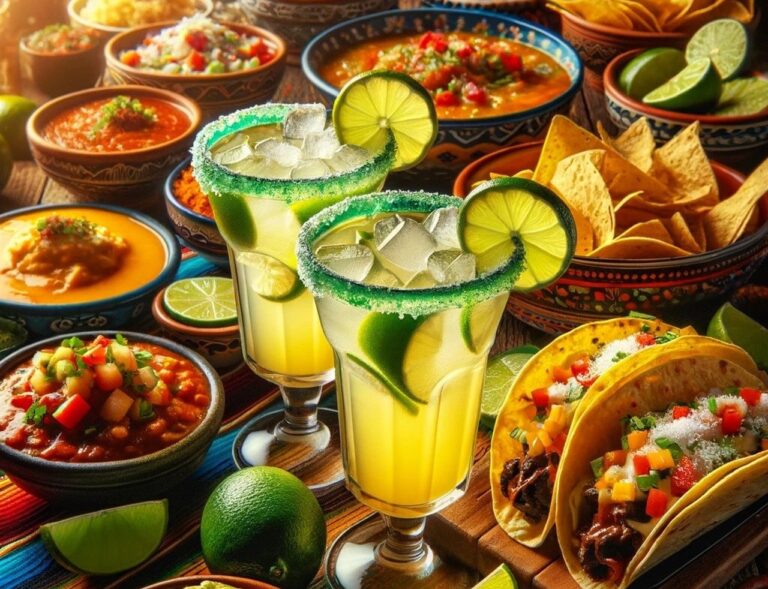
CINCO DE MAYO CRAFT COCKTAILS | GAYOT.com
Let’s be festive on Cinco de Mayo with some craft cocktails. Get the recipes.
-
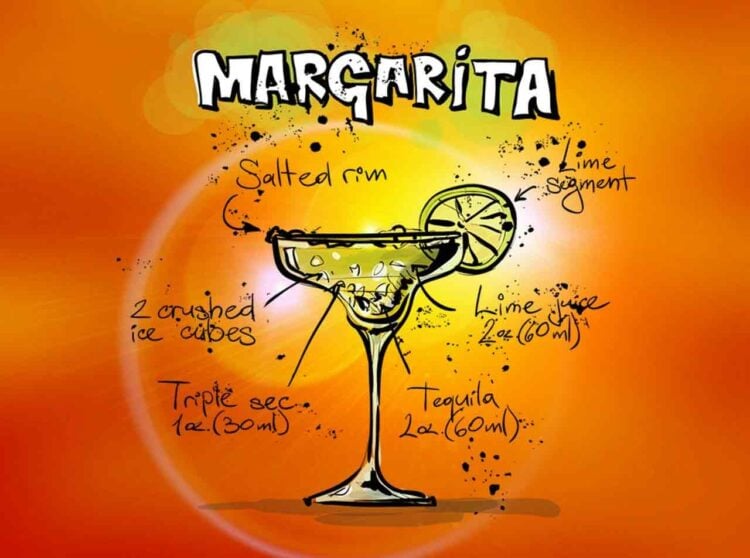
GUIDE TO THE PERFECT MARGARITA | GAYOT.com
Since there are many stories about the origin of the margarita, let us cheers to all of them! Get the recipes.
-
A GETAWAY IN MEXICO | GAYOT.com
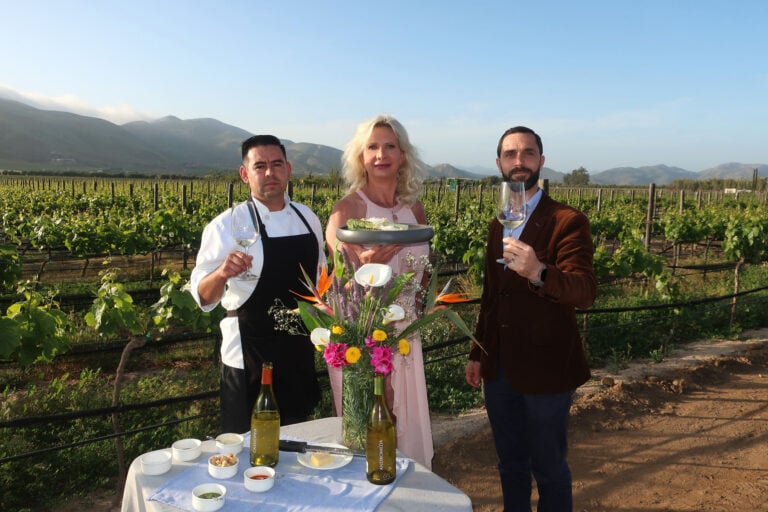
Travel to Mexico and dine in the vines at Latitud 32 at El Cielo Winery, Valle de Guadalupe, Baja California, Mexico. Read the article.
-
BEST MEXICAN RESTAURANTS | GAYOT.com
Celebrate Cinco de Mayo at one of GAYOT’s picks for the Best Mexican Restaurants across the U.S. See the lists.