Pages
Categories
- Alain Gayot
- André Gayot
- Atlanta
- Australia
- Automobiles
- Aviation
- Baltimore
- Boston
- Charity Events
- Charleston
- Chicago
- Chocolate
- Cruises
- Dallas/Fort Worth
- Design
- Detroit
- Dining
- Events
- Fashion
- Florida
- Food
- France
- Gastronomy
- Gayot Dinner Series
- Hawaii
- Hotels
- Houston
- Italy
- Jeff Hoyt
- Jennifer Olvera
- Jersey Shore
- Las Vegas
- London
- Los Angeles
- Mexico
- Miami/South Florida
- Movies
- Museums
- Napa Valley
- New Mexico
- New Orleans
- New York
- Newsletter
- Orange County
- Paris
- Puerto Rico
- Restaurant Issue 2011
- Restaurant Issue 2012
- San Antonio
- San Diego
- San Francisco/Bay Area
- Seattle
- Showbiz
- Sophie Gayot
- Spas
- Sports
- St. Louis
- Tea
- Top 40 US Restaurants
- Top Chef TV Show
- Travel
- Video Interviews
- Washington DC
- Wine, Spirits, Beer & More
Archives
- May 2012
- April 2012
- March 2012
- February 2012
- January 2012
- December 2011
- November 2011
- October 2011
- September 2011
- August 2011
- July 2011
- June 2011
- May 2011
- April 2011
- March 2011
- February 2011
- January 2011
- December 2010
- November 2010
- October 2010
- September 2010
- August 2010
- July 2010
- June 2010
- May 2010
- April 2010
- March 2010
- February 2010
- January 2010
- December 2009
- November 2009
- October 2009
- September 2009
- August 2009
- July 2009
- June 2009
- May 2009
- April 2009
- March 2009
- February 2009
- January 2009
- December 2008
- November 2008
- August 2008
27
Apr
By André Gayot
As the world gets global and progressively engulfs its denizens into a single one-fits-all mold, it’s an encouraging sign that here and there some rebels are proclaiming a personality of their own. Interestingly enough, the affirmation of such an individualism stems from the food, not as a raw material, but from the understanding we have of it and the procedures we invent to process it.
I had the privilege to observe such a comforting manifestation where last week in Puerto Rico when I attended the third annual “Saborea” (Spanish for “Savor” or “taste) event. It takes place along a sandy beach fringed with coconut trees on this American-style Caribbean island. The tropical setting is enough to tell what is reasonable to expect under these latitudes. Indeed, location, tradition, and production determine ipso facto the limits of the gastronomy. But imagination, this essential human addition, can transcend—or not—the regional capacities.
That’s why it was such a lively spectacle to watch these 28 local cooks displaying skills and talent to showcase the character of the Caribbean cuisine in a demonstration kitchen theater where personalization superseded uniformity. This is an occasion to discover or rediscover the tastes and saveurs that are rarely perceived in our metropolises, at least not with the same intensity and authenticity. With the explanations of our local colleague Yaira Solis Escudero, who is also instrumental in the Saborea program, it’s enriching to enter into the core of the “Mofongo” (the popular Puerto Rican dish made from mashed fried plantains and meat or seafood), to follow the steps of the chefs and appreciate that the “sofrito,” for instance, is the seal of approval of the genuine Caribbean cuisine. Sofrito is the seasoning (pork, ham, lard, oregano, onion, garlic, green pepper, chili, cilantro) used to flavor most of the Puerto Rican dishes. It is a trait of character that must be preserved to maintain the cachet of this cuisine.
It’s probably a good idea that the locals invite cuisiniers from abroad and observe their savoir faire and tour de mains (dexterity). It can help them to hone their own deftness. A caveat, though: it would not be so good to copy them to the extent that, at the end of the day, it would wind up in the debasement of the local values. “Molecularizing” an apple with olive oil and liquid nitrogen is fun to watch, but let’s hope the plantains, mangos, pineapples, and other local fruit will be spared such a mutation.
Cooking obviously has become a show. Let’s not forget it’s (also and primarily) an art.
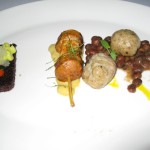
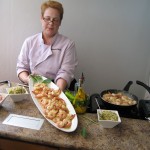
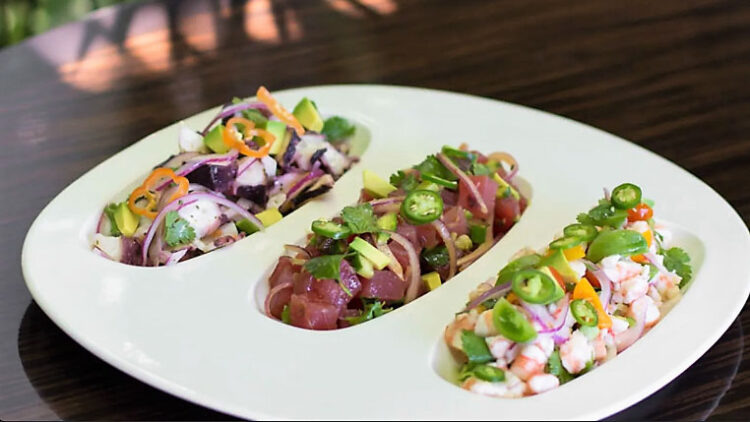
- Samples of local cuisine
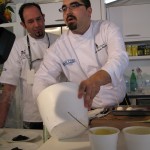
- “Top Chef” of Spain Juan Andrés R. Morilla “molecularizing” an apple at Saborea
- Chef Giovanna Huyke of the TV cooking show, Cocina con Giovanna
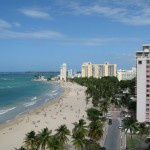
- The beaches of San Juan
- A view of the San Juan Harbor
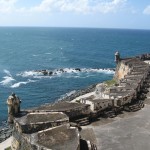
- A view from an old fort in San Juan
2 Comments »
RSS feed for comments on this post. TrackBack URL


I feel proud to be from this fabulous island, where the talent of our people continues to be exhalted by recognized and respected industry critics, in the different dimensions. Saborea Puerto Rico is an example of the quality of professionals we have, including not only our culinary artists, but those respomsible for putting together an event of that magnitude. One that continues to grow and shine!
To our local Chefs – hats off!!! And to all the guest chefs that participated, thank you for supporting this event, sharing your creations and loving our island culture!
May we continue to live many Saborea Puerto Rico editions for many years to come!
Congrats!
Comment by Yoly Torres-Cuesta — May 8, 2010 @ 9:55 am
The food from Puerto Rico is a great discovery for may people but a staple for me. Is great to se how the cuisine form PR is been evolving in such a contemporay style and still keeping its roots. Lets enjoy this flavorful creations with amazing wines from around the world wine regions, definetly Tempranillo from Spain, Burgundian Pinot Noir and a lot to select from the diverse North America’s AVA.
Comment by Edgar Solis — May 26, 2010 @ 10:38 am