|

Eating
Around Valencia
Papa
Hemingway, Paella and More Pure Culinary
Joy
by John
Mariani
 |
In the minds of Americans, the dish
most associated with Spain's
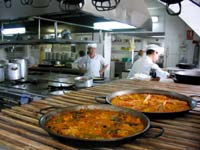
region of Valencia is probably paella, an open-air
meal in one big platter, cooked over a wood fire
until the rice sticks to the bottom and gets crispy,
which is considered one of the best parts of a
paella. Gastronomic purists say the original paella
was made only with eels from Albufera, Valencia's
saltwater lagoon, but today a wide variety of
ingredients, from seafood to chicken and rabbit, find
their way into a wide variety of paellas.
A good paella, made with the short-grained rice of
the kind grown in vast paddies just outside of the
city of Valencia should be moist and tender, with
every grain suffused with flavor, neither mushy nor
dry, though somewhat drier than an Italian risotto.
Depending on the Valencian you are speaking to, only
red or only white wine should be drunk while eating
paella. Another will say, wrong! You drink sangria
with paella.
Once paella was a poor man's dish, until it became
popular in the city on Thursdays and Sundays—though
the locals usually eat some form of rice dish almost
every day. Sunday continues to be a traditional time
to go out for paella, and the neighborhood to go is
along the seaside, palm-lined Avenue Neptune, where
perhaps a dozen restaurants feature the dish. They
all look more or less alike, and the menus don't
differ by much. Families seem to have their
favorites, or else skip from one to another from week
to week.
Whether
you’re craving said paella, want a counter full of
tapas for nibbling with a cold Mahou beer or a dry
fino Sherry or desire some of the region's
fine seafood, here’s where to go:
La
Pepica
Avenida Neptuno 6
46011 Valencia
Spain
96-371-0366
www.lapepica.com
This was
Ernest Hemingway’s favorite, and nothing has changed.
Recall his notes from The Dangerous Summer:
“Dinner at Pepica's was wonderful. It was a big,
clean, open-air place and everything was cooked in
plain sight. You could pick out what you wanted to
have grilled or broiled and the seafood and the
Valencian rice dishes were the best on the beach. You
could hear the sea breaking on the beach and the
lights shone on the wet sand.” Hemingway ate heartily
and was very fond of the Balaguer family that still
owns the restaurant and remembers Papa’s good
appetite for food and drink.
La Rosa
Avenida Neptuno 70
Valencia
Spain
96-371-2076
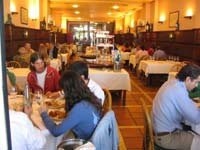 After mass, locals
flock to feast here, though no proper lunch begins
much before 2 p.m. in the afternoon in Valencia. In
order to get good seating at an outdoor table looking
over the beach and sea, shoot for a 1:30 p.m.
reservation. La Rosa has a vast menu and a fairly
good wine list, with a number of excellent Valencian
wines priced at $10-$18, while Riojas and Priorats
cost far more. Opt for fried pork skins called
chicharrones instead of a banal salad of
pink tomatoes, shredded carrots and mediocre ham.
Paella is mandatory. The lightly seasoned dish comes
steaming in a big, concave pan; a version with rabbit
and chicken has green beans and snails added to the
mix. The meal with wine, water, service and tax,
comes to less than $50. After mass, locals
flock to feast here, though no proper lunch begins
much before 2 p.m. in the afternoon in Valencia. In
order to get good seating at an outdoor table looking
over the beach and sea, shoot for a 1:30 p.m.
reservation. La Rosa has a vast menu and a fairly
good wine list, with a number of excellent Valencian
wines priced at $10-$18, while Riojas and Priorats
cost far more. Opt for fried pork skins called
chicharrones instead of a banal salad of
pink tomatoes, shredded carrots and mediocre ham.
Paella is mandatory. The lightly seasoned dish comes
steaming in a big, concave pan; a version with rabbit
and chicken has green beans and snails added to the
mix. The meal with wine, water, service and tax,
comes to less than $50.
Raco
del Turia
10 Carrier Ciscar
Valencia
Spain
96-395-1525
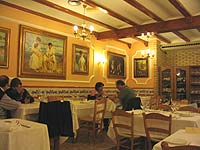 This is an
excellent starting point for your education in
Valencian cuisine. Bright and cheery, it’s welcoming
to locals and foreigners alike. The moderately-sized
dining room has wood beams, white moulding,
painted-tile wainscoting, peach walls and brass
chandeliers. Food-related paintings festoon the
walls, including one with a scene of paella being
cooked in the countryside. The food here is seriously
traditional, beginning with a very pleasing
arrangement of grilled zucchini, asparagus, tomatoes,
eggplant, onions and mushrooms dressed with a
well-rendered romesco sauce of almonds,
peppers, onions, tomato, garlic and olive oil. Fat,
fresh shrimp arrive piping hot and gilded with garlic
and oil. Monkfish, on the other hand, is better
naked, without its gummy white sauce. This is an
excellent starting point for your education in
Valencian cuisine. Bright and cheery, it’s welcoming
to locals and foreigners alike. The moderately-sized
dining room has wood beams, white moulding,
painted-tile wainscoting, peach walls and brass
chandeliers. Food-related paintings festoon the
walls, including one with a scene of paella being
cooked in the countryside. The food here is seriously
traditional, beginning with a very pleasing
arrangement of grilled zucchini, asparagus, tomatoes,
eggplant, onions and mushrooms dressed with a
well-rendered romesco sauce of almonds,
peppers, onions, tomato, garlic and olive oil. Fat,
fresh shrimp arrive piping hot and gilded with garlic
and oil. Monkfish, on the other hand, is better
naked, without its gummy white sauce.
Tasca
Josue
19 Carrier Calixto III
Valencia
Spain
96-384-1873
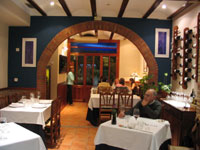 A marked evolution
of the local cuisine with modern flair in
presentation can be found at Tasca Josue, situated in
a busy, youthful neighborhood packed with young
people who like to go out and stay out very late. The
staff doesn’t speak English, but that doesn’t stop
chef-owner, Jesus Ribes, from standing in his open
kitchen and happily explaining what’s good that
night. Just nod and say "o.k." to whatever he
suggests. His recommendations might include an
appetizer of a bright-tasting salad of thinly sliced
octopus, zucchini, red onion, tomato and a gloss of
olive oil. Or try a "shooter" with puréed red pepper
and garlic and a single shrimp on the side; then
embark on a lovely plate of octopus with macadamias,
asparagus, carrots, zucchini and a slick of squid ink
sauce. Tagliarine pasta of calamari is tossed with
string beans and zucchini, with a paprika-infused
mayonnaise. For a main course, sea bass comes with
assorted sautéed mushrooms and pine nuts; a filet
mignon gets accompaniment from haystack potatoes and
delicious shreds of Spanish ham. For dessert, melon
soup with yogurt sorbet is a perfect way to end the
fairly light meal—or you could just go extreme and
polish the whole experience off with a brownie
smothered in chocolate ice cream, white chocolate
sauce and passion fruit. Dinner comes to about $70,
with wine, service and tax. A marked evolution
of the local cuisine with modern flair in
presentation can be found at Tasca Josue, situated in
a busy, youthful neighborhood packed with young
people who like to go out and stay out very late. The
staff doesn’t speak English, but that doesn’t stop
chef-owner, Jesus Ribes, from standing in his open
kitchen and happily explaining what’s good that
night. Just nod and say "o.k." to whatever he
suggests. His recommendations might include an
appetizer of a bright-tasting salad of thinly sliced
octopus, zucchini, red onion, tomato and a gloss of
olive oil. Or try a "shooter" with puréed red pepper
and garlic and a single shrimp on the side; then
embark on a lovely plate of octopus with macadamias,
asparagus, carrots, zucchini and a slick of squid ink
sauce. Tagliarine pasta of calamari is tossed with
string beans and zucchini, with a paprika-infused
mayonnaise. For a main course, sea bass comes with
assorted sautéed mushrooms and pine nuts; a filet
mignon gets accompaniment from haystack potatoes and
delicious shreds of Spanish ham. For dessert, melon
soup with yogurt sorbet is a perfect way to end the
fairly light meal—or you could just go extreme and
polish the whole experience off with a brownie
smothered in chocolate ice cream, white chocolate
sauce and passion fruit. Dinner comes to about $70,
with wine, service and tax.
L'Ambigù
Carrier Felip Maria Garin
Valencia
Spain
96-337-4005
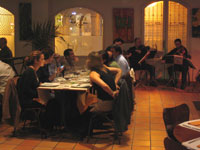 A hip young crowd
goes with the flow: Canned contemporary pop
alternates with enchanting classical music played by
a string quartet. The menu is equally eclectic and
changes often. Chef Mariano Fernandez and his three
women cooks share some of the experimentalism of
Ferran Adrià. They favor tasting menus here, and if
you are adventurous and not tied to tradition,
L'Ambigù should fit the bill. The presentations
dazzle: The Mediterranean salad, in a star pattern,
is made from a purée of yellow tomato and olive oil
with a little scoop of avocado ice cream. It’s a
striking way to start off the meal. The raspberry
vinegar-anchovy soup sounds horrible but tastes
amazing, like a cold gazpacho, bracing and tart. Less
successful is the "Mar y Montagna" (sea and
mountain), which combines pork, squid and octopus
formed into a kind of torta with a curried green
salad and shrimp sauce. To give you an idea of
Valencians’ way with rice, Fernandez provides you
with four versions: squid; octopus and asparagus;
chicken and rabbit; and cauliflower and cod.
Succulent pork cheeks with raisins, chorizo, and a
potato pancake pale only by comparison with the rest
of the meal. End up with a superb and fascinating
orange mousse adorned with a crispy orange slice and
little jellied orange squares. A tasting menu here
runs about $50. A hip young crowd
goes with the flow: Canned contemporary pop
alternates with enchanting classical music played by
a string quartet. The menu is equally eclectic and
changes often. Chef Mariano Fernandez and his three
women cooks share some of the experimentalism of
Ferran Adrià. They favor tasting menus here, and if
you are adventurous and not tied to tradition,
L'Ambigù should fit the bill. The presentations
dazzle: The Mediterranean salad, in a star pattern,
is made from a purée of yellow tomato and olive oil
with a little scoop of avocado ice cream. It’s a
striking way to start off the meal. The raspberry
vinegar-anchovy soup sounds horrible but tastes
amazing, like a cold gazpacho, bracing and tart. Less
successful is the "Mar y Montagna" (sea and
mountain), which combines pork, squid and octopus
formed into a kind of torta with a curried green
salad and shrimp sauce. To give you an idea of
Valencians’ way with rice, Fernandez provides you
with four versions: squid; octopus and asparagus;
chicken and rabbit; and cauliflower and cod.
Succulent pork cheeks with raisins, chorizo, and a
potato pancake pale only by comparison with the rest
of the meal. End up with a superb and fascinating
orange mousse adorned with a crispy orange slice and
little jellied orange squares. A tasting menu here
runs about $50.
Hotel
Rural "El Envero"
6 Plaza del Omo
96-217-6000
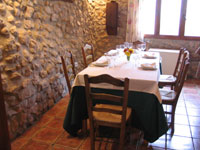 This
charming restaurant sits outside of a little hill
town in Estenas near Utiel, set on a winding street
seemingly in the middle of nowhere. There are only
three rooms here, tiny but cozy, rustic with stone
walls. The dining room is just as minuscule, with a
small fireplace and only about half a dozen well-set
tables. Pure sunlight pours through the window and
casts a golden glow. There is a menu of seven
appetizers, three meats and five desserts, and the
delicious food is prepared simply. Begin with a
carpaccio of beef, and bacalao (salt cod)
that tingles with dried peppers. There is also a
delightful dish of sweetbreads with trumpet
mushrooms. The real strength of the cooking, however,
is the array of meats cooked over a wood
fire—something the Spanish do as well or better than
any people on earth. Feast on acorn-fed pork, or
velvety cochinillo (suckling pig). Baby lamb
is perfectly juicy, fatted and richly flavorful with
a faint smokiness imparted from the slow cooking. The
tenderloin of beef with liver is equally delightful.
Entrées range from $15-$19. Add a bottle of Valencian
Bobal from a producer such as Dominio de la Vega, and
you might want to stay on for days in this small
corner of Spain. This
charming restaurant sits outside of a little hill
town in Estenas near Utiel, set on a winding street
seemingly in the middle of nowhere. There are only
three rooms here, tiny but cozy, rustic with stone
walls. The dining room is just as minuscule, with a
small fireplace and only about half a dozen well-set
tables. Pure sunlight pours through the window and
casts a golden glow. There is a menu of seven
appetizers, three meats and five desserts, and the
delicious food is prepared simply. Begin with a
carpaccio of beef, and bacalao (salt cod)
that tingles with dried peppers. There is also a
delightful dish of sweetbreads with trumpet
mushrooms. The real strength of the cooking, however,
is the array of meats cooked over a wood
fire—something the Spanish do as well or better than
any people on earth. Feast on acorn-fed pork, or
velvety cochinillo (suckling pig). Baby lamb
is perfectly juicy, fatted and richly flavorful with
a faint smokiness imparted from the slow cooking. The
tenderloin of beef with liver is equally delightful.
Entrées range from $15-$19. Add a bottle of Valencian
Bobal from a producer such as Dominio de la Vega, and
you might want to stay on for days in this small
corner of Spain.
Dársena
Marina Deportiva
Muelle de Levante 6
Alicante
Spain
96-520-7589
www.darsena.com
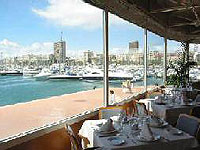 Valencia’s
situation on the sea makes the bounty of the
Mediterranean readily available. Some of the best
seafood restaurants are in the vacation city of
Alicante, which sprawls around the deep water harbor
dotted with some of the largest yachts in European
waters. Watch them ply those waters at the
45-year-old restaurant Dársena, a huge place with
indoor and outdoor seating and an ebullient
host-owner, Don Antonio Agustin Pérez, who seems to
regard everyone as an old friend. He’s deferential to
all the women, with a firm handshake for all the men.
He bounds about his restaurant with obvious glee, as
he should: He's very successful. Graze at the long,
tempting tapas bar here where you might eat your fill
for the day or night. You’ll find dozens of
crustaceans and mollusks glistening on ice, and whole
fish are admirably displayed for you to see in all
their pristine freshness. The menu is vast beyond all
that, and rice dishes and paellas teem with
ingredients straight from the morning’s catch. Go
with several friends and order a variety of rice
dishes with shrimp, anchovies, langoustines, squid or
any of a score of other ingredients. Drink the wines
of Alicante (which are very good and amazingly
cheap), look out on the water and revel that you are
in one of Spain’s most beautiful
spots. Valencia’s
situation on the sea makes the bounty of the
Mediterranean readily available. Some of the best
seafood restaurants are in the vacation city of
Alicante, which sprawls around the deep water harbor
dotted with some of the largest yachts in European
waters. Watch them ply those waters at the
45-year-old restaurant Dársena, a huge place with
indoor and outdoor seating and an ebullient
host-owner, Don Antonio Agustin Pérez, who seems to
regard everyone as an old friend. He’s deferential to
all the women, with a firm handshake for all the men.
He bounds about his restaurant with obvious glee, as
he should: He's very successful. Graze at the long,
tempting tapas bar here where you might eat your fill
for the day or night. You’ll find dozens of
crustaceans and mollusks glistening on ice, and whole
fish are admirably displayed for you to see in all
their pristine freshness. The menu is vast beyond all
that, and rice dishes and paellas teem with
ingredients straight from the morning’s catch. Go
with several friends and order a variety of rice
dishes with shrimp, anchovies, langoustines, squid or
any of a score of other ingredients. Drink the wines
of Alicante (which are very good and amazingly
cheap), look out on the water and revel that you are
in one of Spain’s most beautiful
spots.
 John
Mariani is well known for his
frank and poignant writing in
Esquire, Wine Spectator,
Diversion and the Harper
Collection. He is author of The
Encyclopedia of American Food & Drink,
The Dictionary of Italian Food and
Drink and co-author, with his wife, of
the Italian-American
Cookbook. John
Mariani is well known for his
frank and poignant writing in
Esquire, Wine Spectator,
Diversion and the Harper
Collection. He is author of The
Encyclopedia of American Food & Drink,
The Dictionary of Italian Food and
Drink and co-author, with his wife, of
the Italian-American
Cookbook. |
|
Images by
Galina Stepanoff-Dargery
(Updated:
09/13/10 NW)
|










 See more
 Over the years, we have been electing restaurants to be on GAYOT's Yearly Restaurant Awards.
 Facebook
 (formerly Twitter)
 Instagram